Agentic AI Exchange
From Pilot to Production: Turning Agentic AI Vision into Governed, Scalable, Measurable Reality
San Diego, California | April 29 - May 1, 2026
Agenda Day 2
Governance, Risk Mitigation & Change Management
8:00 am - 9:00 am
EST
BREAKFAST
9:00 am - 9:10 am
EST
CHAIR’S DAY TWO WELCOME & RECAP OF DAY 1
9:10 am - 9:55 am
EST
PANEL DISCUSSION: Governing Agents Effectively to Ensure Consistent Quality – Mission Impossible?
Patrick Chew -
VP, AI & Data Science,
AIT Worldwide Logistics
Monica Kedzierski - Head Of Responsible AI, Claritev
• Frameworks for governing autonomous agents across distributed enterprise environments
• Ensuring consistency and reliability: drift detection, policy enforcement, auditability, and real-time oversight
• Balancing autonomy and control to enable innovation while protecting brand, safety, and compliance
• Techniques for evaluating agent quality across tasks, domains, and multimodal workflows
• Lessons learned from early enterprise deployments and what leaders would do differently next time


9:55 am - 10:15 am
EST
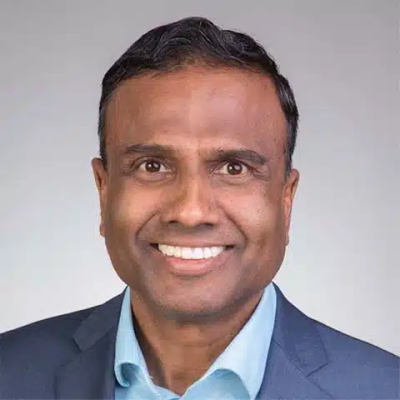
KEYNOTE: From Reactive Defense to Proactive Security: AI That Acts Before Incidents Happen
Pandian Gnanaprakasam -
CEO,
ORDR
Jacob Combs - CISO, Tandem Diabetes Care
AI has flooded security teams with insights. But insights alone don’t stop disruption, they require action. ORDR’s CEO joins Steve Madden to explore how forward-thinking organizations are harnessing AI not just to detect threats, but to operationalize action to prevent them. The future of security isn’t faster alerts. It’s intelligence that becomes enforcement.
- Moving beyond AI insights to AI-informed action — Close the gap between detection and enforcement.
- Operationalizing Zero Trust at scale — Use AI to generate precise, behavior-based policies that reduce risk without disrupting the business.
- Keeping humans in control while accelerating response — Combine AI speed with governed, code-enforced execution

10:15 am - 10:45 am
EST
NETWORKING BREAK
10:45 am - 11:15 am
EST
BUSINESS MEETINGS | concurrent MENTORSHIP PROGRAM
11:20 am - 11:50 am
EST
BUSINESS MEETINGS | concurrent MENTORSHIP PROGRAM
11:50 am - 12:50 pm
EST
NETWORKING LUNCH
12:50 pm - 1:50 pm
EST
ROUNDTABLES
Vijay Gandapodi DBA -
VP Data Analytics and AI,
Campbells
Monica Kedzierski - Head Of Responsible AI, Claritev
Jamonica Miller - Director of Product Development, Purchasing Power LLC
Led by Dr Vijay Gandapodi, VP Data Analytics And AI, Campbells
2. ROUNDTABLE: Beyond Compliance: Aligning AI Agent Strategy with Responsible AI
Led by Monica Kedzierski, Head of Responsible AI, Claritev
3. ROUNDTABLE: Dos and Don'ts to Manage Fear Around Agentic Automation Initiatives
Led by Jamonica Miller, Director of Product Development, Purchasing Power
This roundtable explores how leaders can proactively address workforce anxiety while scaling intelligent automation. This roundtable will highlight practical strategies to build trust, communicate transparently, and avoid common missteps that trigger resistance or disengagement. Participants will share real-world approaches to aligning innovation with organizational confidence and cultural readiness.


1:55 pm - 2:25 pm
EST
BUSINESS MEETINGS | concurrent INNOVATION WORKSHOP: Small Language Models - the Path to Preventing the Million-Dollar Day? Understanding Limitations, Trade-Offs, and Deployment Decisions
Jodi Blomberg -
VP AI & ML,
Cox Automotive
• When does size matter—and when does it not?
• Assessing contextual understanding and domain fit: How LLMs generalize vs. how SLMs specialize
• Understanding latency, cost, and infrastructure requirements
• Evaluating governance and risk trade-offs: Controllability, explainability, and hallucination risks
• Highlighting data privacy, fine-tuning, and lifecycle considerations

2:30 pm - 3:00 pm
EST
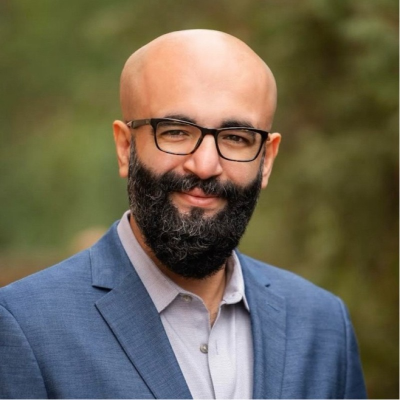
BUSINESS MEETINGS | concurrent PRESENTATION: From Amnesia to Identity: The "Context Layer" Imperative
Ali Alkhafaji -
Chief AI & Technology Officer,
Apply Digital
Moving beyond "Storage" to "Identity": Current solutions largely solve for "Memory" (the passive storage of past interaction logs), but the next generation of agents requires "Context" - a dynamic, structured understanding of the user's identity, environment, and intent (the "5 Ws+H") to drive active decision-making rather than simple retrieval
Exploring the "Three Ps" Standard: As agent context evolves and scales, those solutions must be evaluated against three non-negotiable pillars: Privacy (shifting from platform security to user sovereignty), Portability (breaking the "walled gardens" that lock user history into single apps) and Personalization (achieving deep behavioral alignment rather than just factual recall).
Understanding the end of the “Cold Start”: The industry is paralyzed by fragmentation, where every new agent forces the user to start from zero; the future belongs to architectures that decouple user context from the model, enabling a portable "warm start" where identity travels with the user across the entire digital ecosystem.
3:00 pm - 3:30 pm
EST
NETWORKING BREAK
3:30 pm - 3:50 pm
EST
KEYNOTE: Balancing Autonomy, Security, and Governance in Next-Generation Agent Architectures
Steve Wilson -
Chief AI & Product Officer,
Exabeam
Ali Arsanjani Ph.D. - Director, Applied AI Engineering & Head of GenAI Blackbelts, Google
A joint Google Cloud and Exabeam perspective on building, operating, and securing autonomous AI agents at enterprise scale
- From chatbots to digital workers: Understanding the architectural shift to autonomous, multi-agent systems and what it means for enterprise workflows
- A new attack surface: How autonomous agents introduce novel risks—from prompt injection to tool abuse and insider-like behavior
- Securing agents like insiders: Applying behavioral analytics and insider threat methodologies to monitor, detect, and govern agent activity


3:50 pm - 4:10 pm
EST
OUT-OF-THE-BOX-KEYNOTE: Building a Workforce Ready for Autonomous AI Partners - Rethinking Culture, Teams and Collaboration
Richard Wiedenbeck -
Independent AI Expert / former CAIO,
Ameritas
• Why workforce and culture strategy must evolve in parallel with technology strategy as agentic AI takes hold
• How leaders can prepare teams for human–agent collaboration, augmentation, and shared accountability
• New workforce models and performance frameworks that reflect AI agents as active contributors
• Approaches to maintaining psychological safety, trust, and clarity as AI becomes a visible “colleague”
• How CIOs, CTOs, and AI leaders can partner with HR to drive successful, responsible agentic adoption across the enterprise

4:10 pm - 4:40 pm
EST
PANEL DISCUSSION: Best Practices for Change Management in the Age of Agentic AI
Vijay Gandapodi DBA -
VP Data Analytics and AI,
Campbells
Ali Alkhafaji - Chief AI & Technology Officer, Apply Digital
Scott Thompson - Vice President, Technology, Ssoe Group
Cindi Howson - Chief Data & AI Strategy Officer, ThoughtSpot
• Strategies for preparing teams and leaders for agent-driven workflows and decision augmentation
• How to communicate the value, purpose, and limitations of agentic AI to minimize fear and resistance
• Designing training, upskilling, and human-in-the-loop practices that empower employees
• Organizational structures and governance models that support sustainable AI adoption
• Lessons from early adopters on pacing change, managing risk, and maintaining alignment during transformation